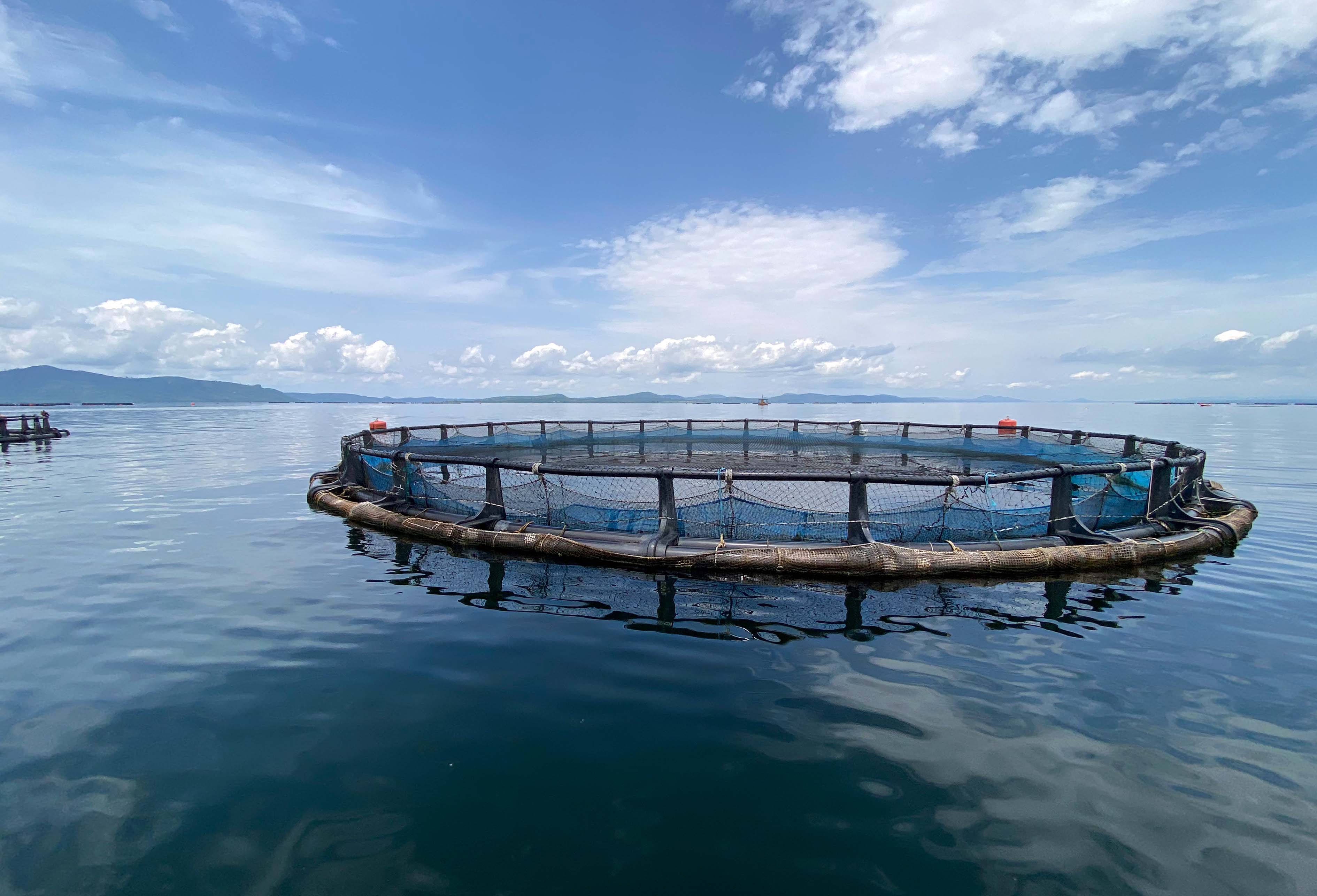
Almost all of the tilapia produced in Ghana is consumed locally, making tilapia aquaculture crucial for the region’s food security. Yet, robust and cost-effective methods for monitoring pathogens are lacking.
Traditional pathogen detection tools identify a single pathogen at a time, with costs scaling quickly with each pathogen screened for. An affordable alternative to targeted pathogen detection would support tilapia aquaculture in Ghana by helping to reduce infectious disease outbreaks, improve farm yields, all while reducing farm operational costs.
With the support of the Foreign, Commonwealth and Development Office (FCDO) and Innovate UK, we’re excited to announce we are leading an international consortium on an innovative project to achieve these goals.
We’re collaborating with Francisco Murillo, CEO of Tropo Farms Ltd., Ghana’s largest tilapia farm, and Ulisses Pereira of State University of Londrina in Brazil.
By analysing the total microbiome with metagenomics, rather than targeting individual pathogens, our consortium aims to establish a metagenomics assay specifically for tilapia farms, so that producers can identify all tilapia pathogens from a single sample of water.
The successful implementation of this technology will significantly reduce the number of samples required to detect the pathogens that routinely affect tilapia production.
Francisco Murillo, CEO of Tropo Farms, believes tilapia farming is essential if aquaculture is to sustain a growing population and thinks total microbiome analysis is one of the many areas that will support this vital sector:
“The FAO estimates that Africa must increase aquaculture production by 74% by 2050 to maintain current consumption per capita. We believe focusing on fish welfare will increase our production performance, which is why we’re excited to join this consortium and help to develop a tool that will improve tilapia welfare by enhancing our pathogen detection efforts.”
This project is supported by the Climate Smart Agriculture Partnership: UK–Brazil–Africa, funded by the Foreign, Commonwealth and Development Office (FCDO) and delivered by Innovate UK.